About the Station
What this place is, who stands behind it, and who supports the work.
Short’s Resort Field Station (SRFS) is the public face of a land restoration on a 103-acre tract above the Lampasas River in the Texas Hill Country — 98.78 acres of it filed in seven restoration sections. On the EPA’s ecoregion map the ground is Limestone Cut Plain (Level IV, 29e), the southern end of the Cross Timbers — not the Edwards Plateau, though the two share most of their trees. Locally it’s the Lampasas Cut Plain, and that shapes what will grow here.
The name’s a small joke — there’s no resort, just a cabin, a river, and seven sections of ground that generations of work wore down: decades of grazing, then a hay monoculture that crowded out most of what used to be native here. It came to the family, and we decided to fix it in the open — and to run the work like an institution so it outlasts any one season.
How the land came to us
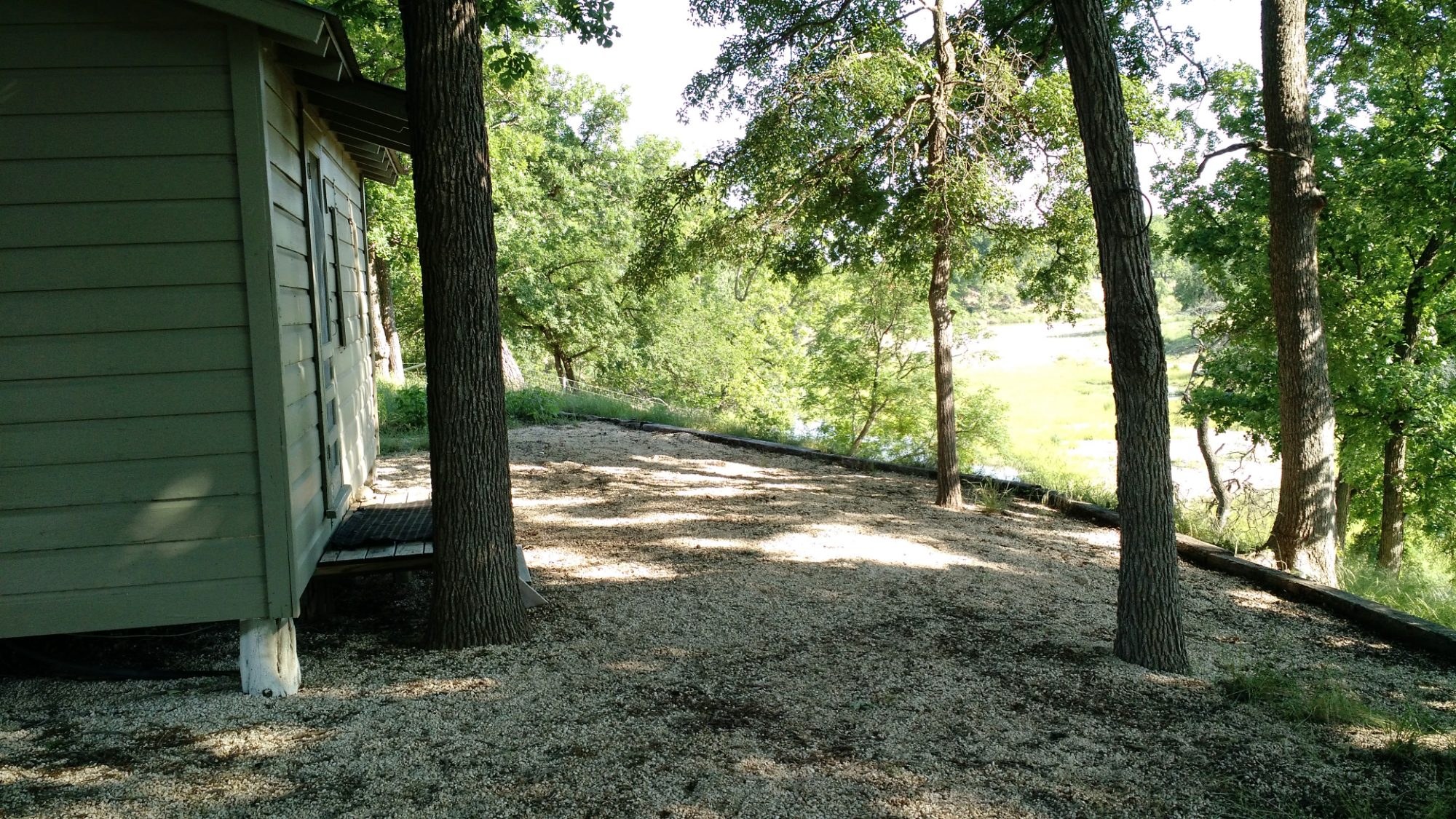 The cabin · 2015
The tract, 103 acres on the Lampasas, came into the family four generations ago. Our great-grandfather, known to everyone as “Short,” farmed wheat in Killeen, Texas, until the federal government took his farm in the 1940s to build what became Fort Hood. Displaced and compensated for the farm, he came to this ground in Lampasas County and did here what he had always done: he grew wheat for seed, and by reputation some of the highest-quality wheat seed in the region.
The land he took over was native trees and grasses over heavy cedar. Family accounts have ship-anchor chains strung between two tractors and dragged across the ground to pull every tree out by the roots. Cleared, it became a wheat farm and a steady income for years. In the early 1960s Short built the cabin down by the river with his children — our grandfather and great-aunts. The family home was across the road on separate acreage, where they raised goats and sheep and cut hay; the cabin was the other thing: somewhere to cool off in the Lampasas after a day in the fields. They named it, half in earnest, “Short’s Resort.” The original hand-painted sign was the work of our great-aunts. It has never had running water or electricity; for years propane ran a refrigerator, a stove, a heater and a few lamps, and only remnants of those remain. The outhouse washed away in a flood long ago.
Fallow, then leased for grazing
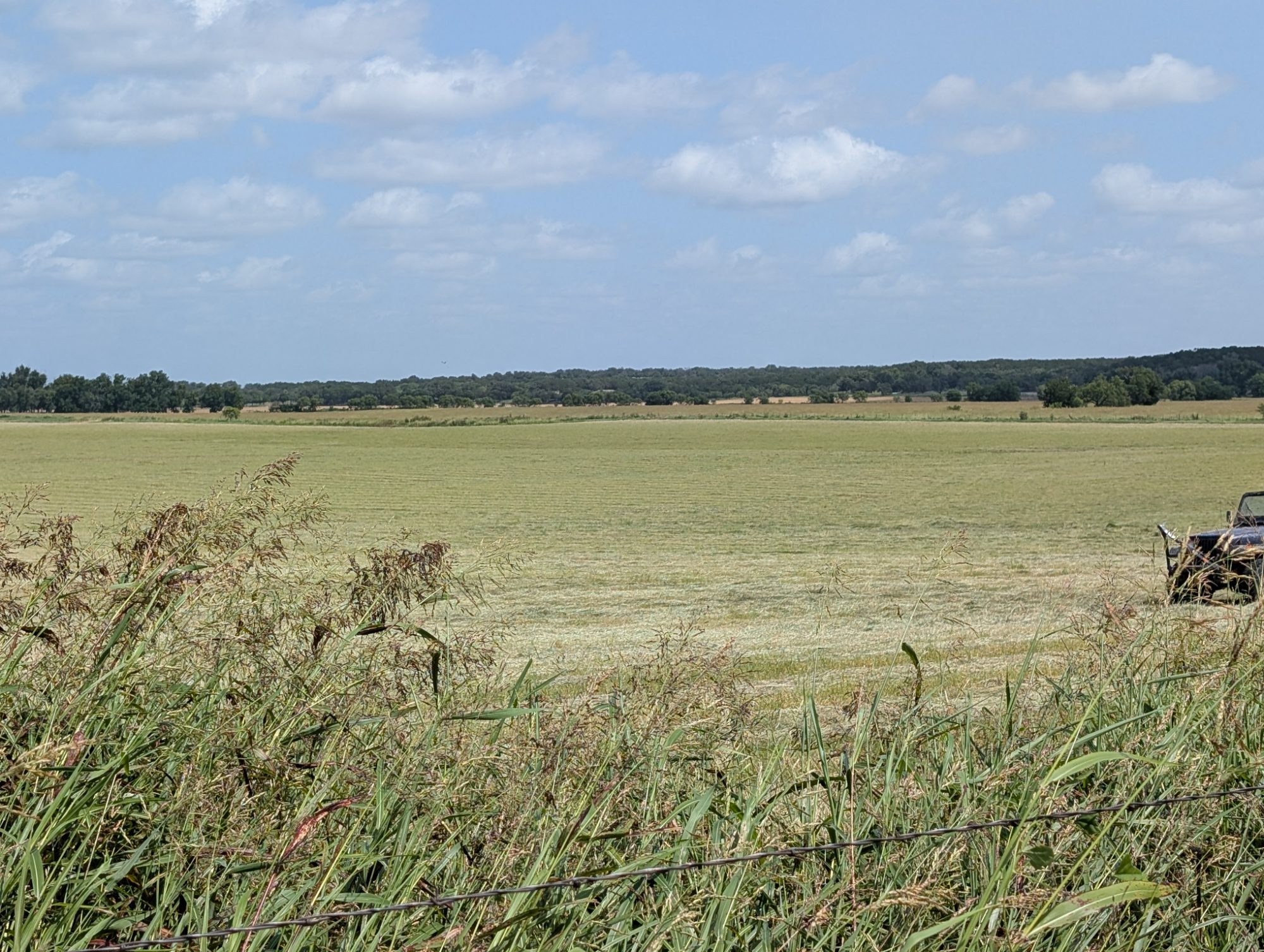 The working field · 2026
When Short retired from farming he let the field go mostly fallow but kept cattle on it under lease. By the standards we hold now it was grazed harder than the ground could carry — the common practice of the day — and there was no fence holding the cattle off the river. The banks eroded, and so did the central drainage corridor; manure ran off, seasonal floods pushed through, and between them larger old trees went down while little new growth came up. Wild pig and white-tailed deer numbers ran unchecked on top of it. When Short passed and our grandfather took over, the land was kept much the same way for years, as it always had been.
That began to change on a visit to work on the old cabin, when the state of the ground was plain enough to act on. We fenced a hundred feet off the river bank and around the cabin to keep the cattle off the water. It slowed the bank erosion; the overgrazing and the corridor washout on the agricultural plain continued.
The Tifton years, and the turn
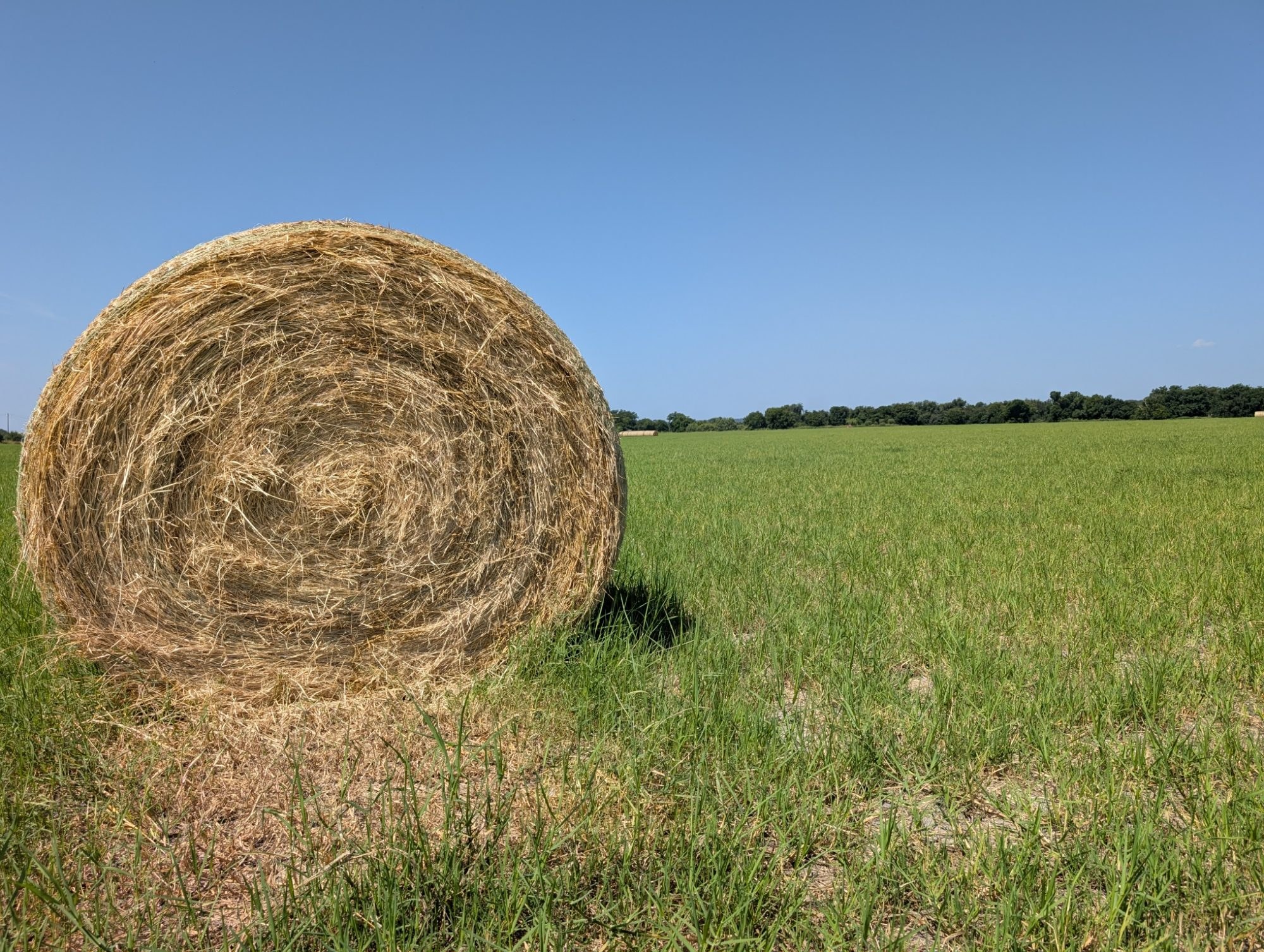 Tifton 85 · 2026
Eventually the cattle came off entirely and our grandfather planted the field in Tifton 85 bermudagrass, on USDA advice at the time: a low-maintenance grass that could be cut for hay and carry a small, steady income. For nearly twenty years it was fertilized and cut and looked the part, but over time it built a monoculture across much of the property — an outcome no one intended — that pushed out the native grasses, shrubs and trees, and with them the dove, quail and raptors that had used the ground.
Our grandfather passed in 2023 and the land came to the fourth generation of the family. We grew up coming to the cabin with our grandparents: camping, fishing and swimming in the cool Lampasas, and taking our first deer on this ground. Since 2023 we have been building the proposal now underway: clear the Tifton monoculture and return the ground to native trees, grasses and woody shrubs, to bring back the native birds and riparian woodland species, slow the erosion as far as we can and restore the oak prairie and river habitat this stretch of the Hill Country carried for most of its history. Four generations on, the cabin still stands, and the work is only the newest form of tending the same ground.
An institution, deliberately
The station’s organized into departments: Forestry & Fire, Water & Power, Wildlife Affairs, Agriculture & Grazing, Hospitality, and the Office of the Steward — each with its own seal and its own patch of responsibility. It’s smaller than that sounds. But the structure is the point: it keeps the work legible, hands it off cleanly, and keeps the records honest.
How it’s supported
The restoration is supported by two specific grants. Cost-share comes through the USDA Natural Resources Conservation Service under the Environmental Quality Incentives Program (NRCS EQIP), administered by the Lampasas County field office. Grassland conversion is supported by a Texas Parks & Wildlife Pastures for Upland Birds (PUB) grant, which is turning our Tifton 85 hayfield back into native prairie. Public support leaves a public trail: practices and outcomes are posted in the Field Journal as they’re completed.
Our Partners
A Land History
Four generations on the same ground. A project meant to outlast the people running it.
- 1940sDisplaced to LampasasThe federal government takes our great-grandfather’s wheat farm in Killeen to build what becomes Fort Hood. Compensated for the farm, “Short” comes to this tract on the Lampasas, clears the ground and grows it in seed wheat — by reputation some of the highest-quality wheat seed in the region.
- Early 1960sThe cabin, and the nameShort builds the cabin down by the river with his children. They call it “Short’s Resort,” the original sign hand-painted by our great-aunts. No running water or electricity — then or since.
- After retirementFallow, then grazedThe field goes mostly fallow and is leased for cattle. Grazed harder than the ground could carry and unfenced from the river, the banks and the central drainage corridor begin to erode; old trees go down and little new growth comes up.
- A first fenceA hundred feet off the waterOn a visit to work on the old cabin, we fence a hundred feet off the river bank and around the cabin to keep cattle off the water. It slows the bank erosion; the corridor washout continues.
- ~2000sThe Tifton yearsThe cattle come off and the field is planted in Tifton 85 bermudagrass on USDA advice — low-maintenance hay and a small, steady income. For nearly twenty years it builds a monoculture that crowds out the natives, and with them the dove, quail and raptors.
- 2023A new steward, and a plan beginsOur grandfather passes and the land comes to the fourth generation of the family. The same year, the work of building a restoration plan for the ground begins in earnest.
- 2023–2025The restoration, proposedTwo years of building the plan now underway: clear the monoculture and return the ground to native trees, grasses and woody shrubs — to bring back the birds, slow the erosion and restore the oak prairie and riparian woodland.
- 2025Grants applied forCost-share applications go in — USDA–NRCS EQIP through the Lampasas County field office, and Texas Parks & Wildlife Pastures for Upland Birds for the grassland conversion.
- 2026Grants received, work beginsBoth grants are awarded and the plan moves off paper and into the ground — the first field season of the restoration.
- June 2026Last harvest, first burndownThe final cutting of Tifton 85 comes off the meadow and the conversion begins — edge first, working inward, with roughly 45% held in hay until the natives prove out.
- OnwardA multigenerational projectLater phases work inward for years, and a restored grassland will want fire and care for lifetimes after. The work is built to be handed forward.