The Cabin, and Why We Started
How a small holding in the Hill Country became a field station.
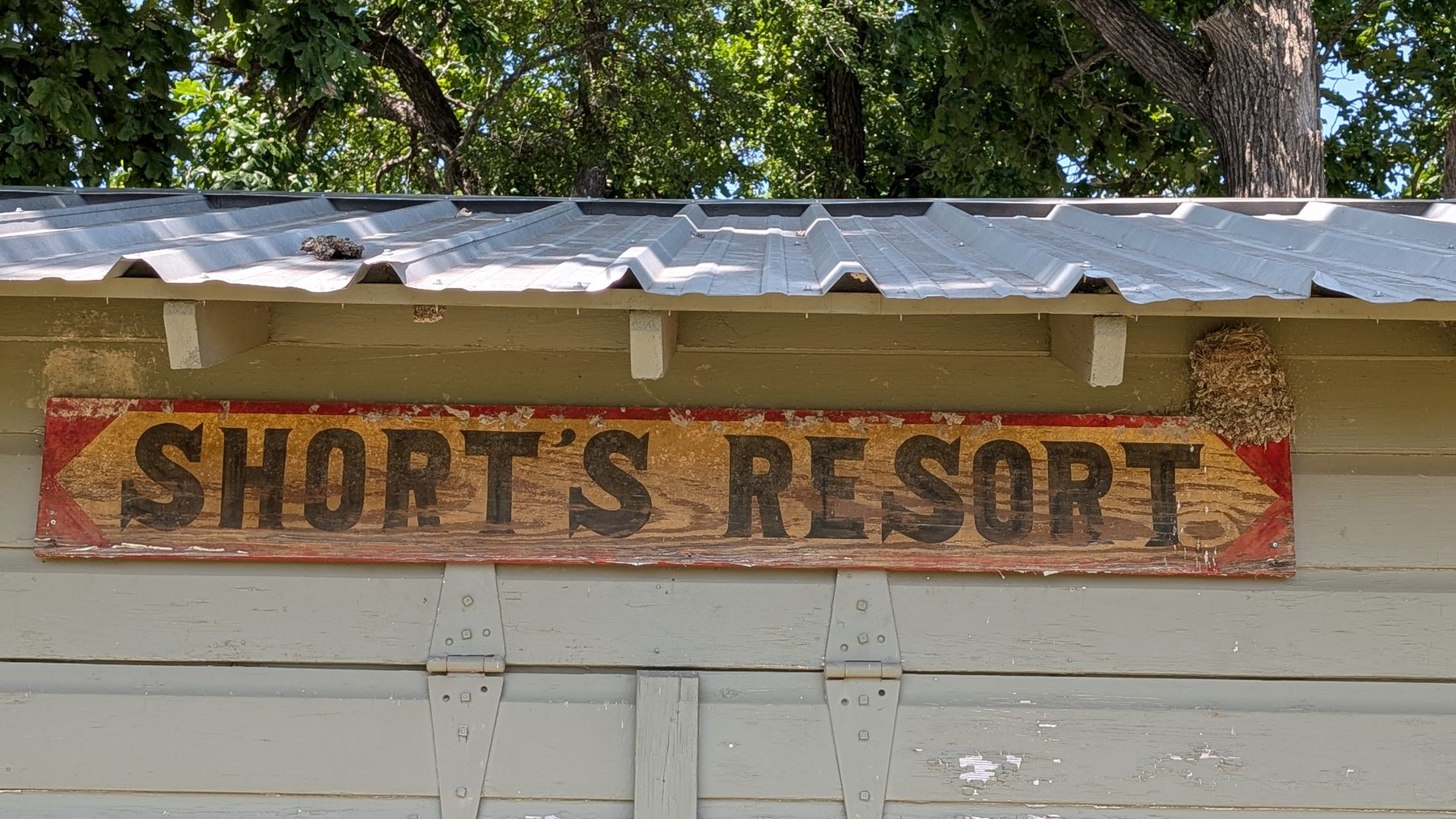 Fig · The original hand-painted sign, still on the cabin
The property begins with a cabin above the Lampasas River. Our great-grandfather — known to everyone as “Short” — was granted this ground in the 1940s after the federal government took his wheat farm in Killeen to build what became Fort Hood. He grew seed wheat here for years, and in the early 1960s built the cabin down by the river with his children. The family home was across the road on separate acreage, where they raised goats and sheep and cut hay; the cabin was the other thing — somewhere to cool off in the Lampasas after a day in the fields. They named it, half in earnest, “Short’s Resort,” and our great-aunts hand-painted the original sign.
It has never had running water or electricity, and four generations on it still stands. We are the newest to keep it, and we still camp at the cabin most times we come down to work the property — which is how a good deal of this restoration gets planned, over a fire and a stretch of river. The name is a small joke that stuck: there is no resort, only a cabin, a river and seven sections of ground to mend. But it carries the spirit we wanted — that this is a place people are welcomed to, and that the work of restoring it should be hospitable too: legible, documented and free for anyone to borrow.
A field journal, not a blog
So this became a field journal of our activities — what we learn, how we organize and track the work, and the problems and solutions we run into along the way. The sections are numbered, the species are recorded, the instruments are logged and the plans are open. An institution stands behind it — small, and mostly one family, but organized like one, because organization is what lets the work outlast any one season or any one pair of hands.