Species Plate · Structural Shrubs
Buttonbush
Restoration Role
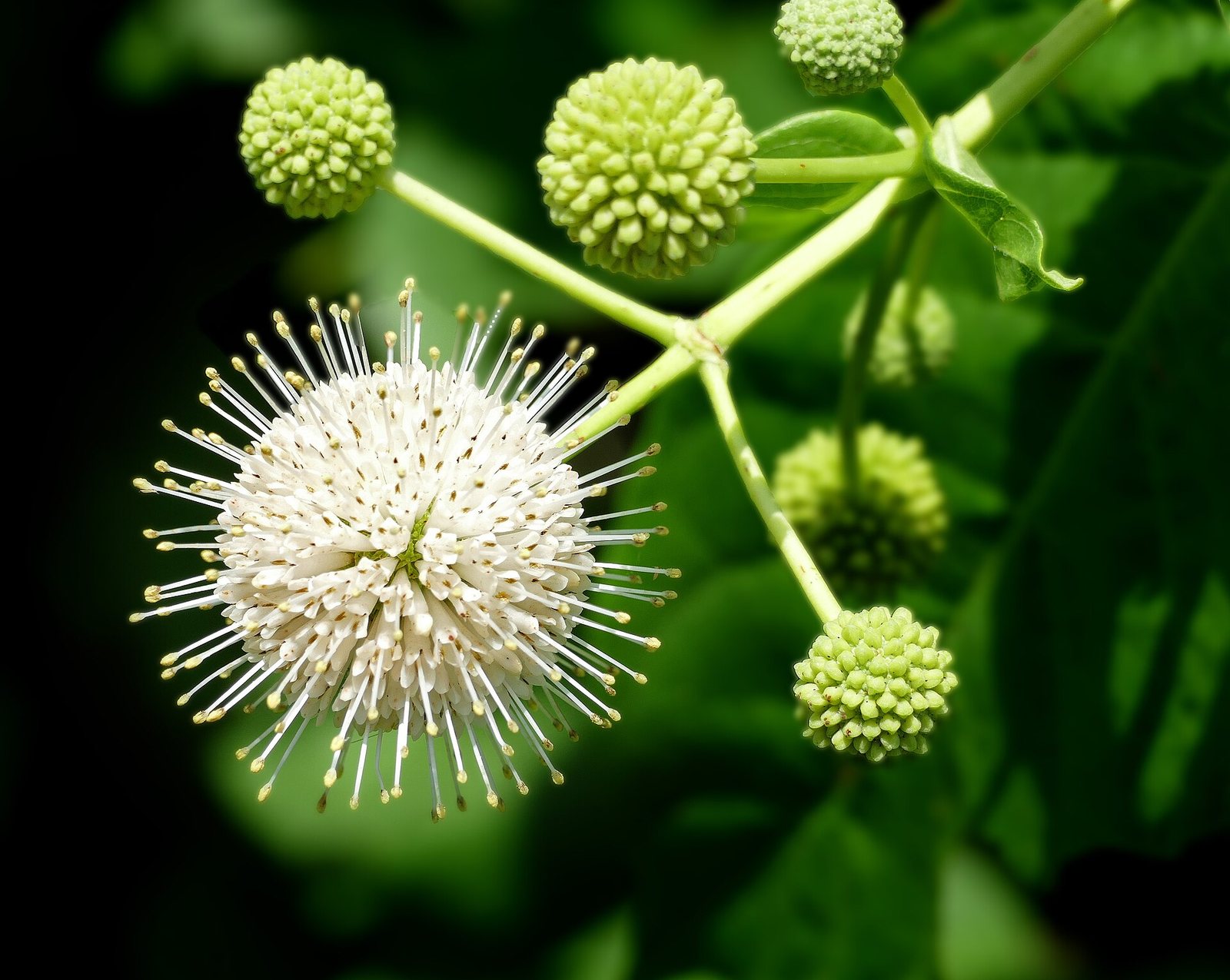
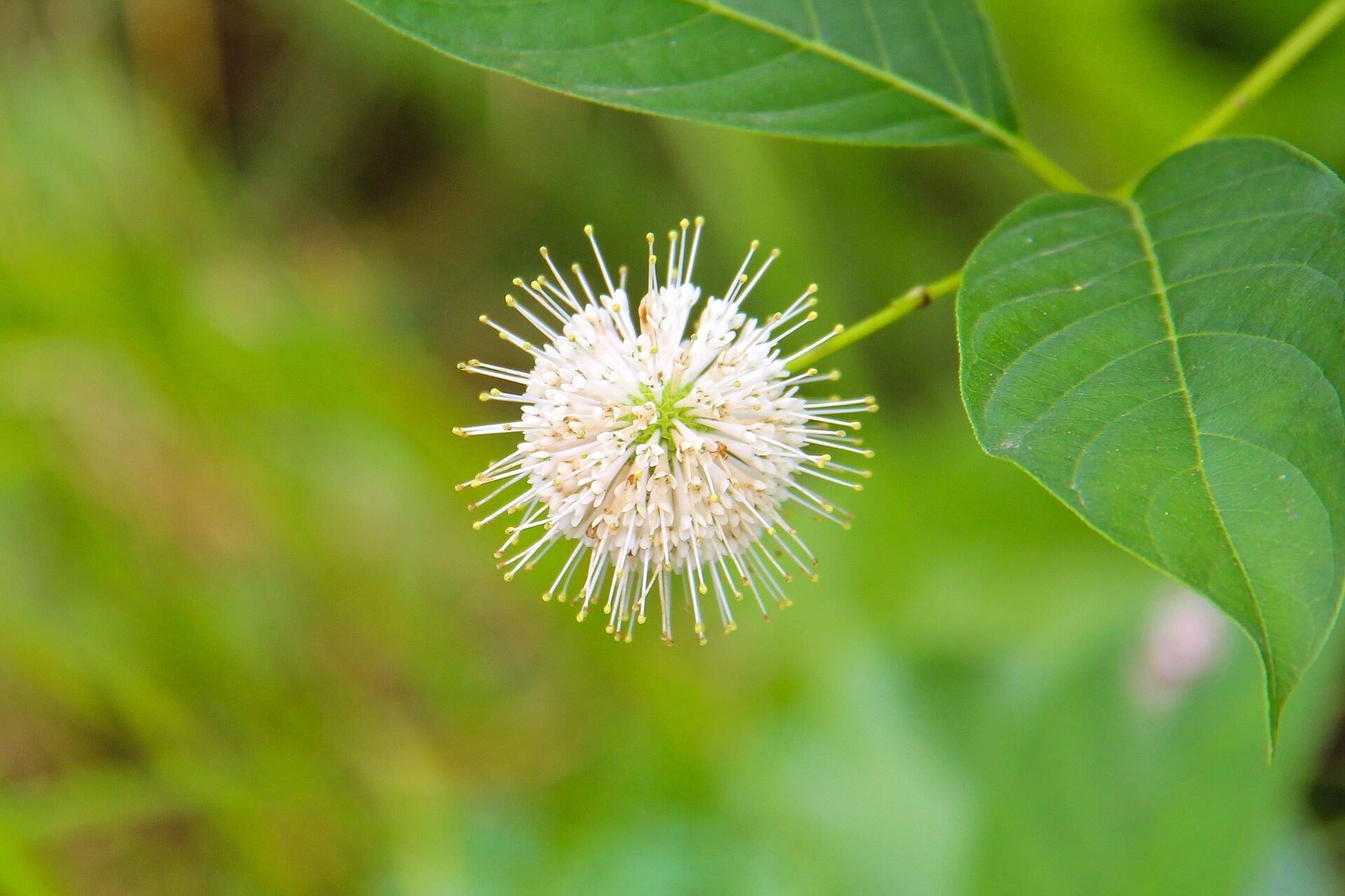
Riparian wetland shrub. Buttonbush carries spherical white pincushion flower heads through summer that are pollinator gold, then hard button seedheads for waterfowl and birds. It tolerates standing water better than almost anything we grow — the natural anchor for the wettest ground on the river strip.
Site Suitability
PrimaryRiver Conservation Strip, Drainage Corridor, tank and pond edges
SecondarySeasonally wet pockets, filter band
AvoidDry uplands, shallow caliche, anywhere that fully dries out
SoilsBeB, Oa; wet-tolerant
HydrologyWet feet to standing water; the wetter the better
Propagation & Care
Seed collectionCollect the hard spherical seedheads in fall; break them apart for the nutlets.
StratificationLittle needed — sow fresh on wet media, or give a short cold-moist period. Cuttings skip stratification entirely.
PropagationFrom cuttings (the fast route): softwood cuttings root quickly in wet media — buttonbush strikes readily. From seed: sow fresh on saturated media; it germinates on wet mud without much fuss.
Container progressionCutting / seedling → 5-inch pot → 1-gal fabric if held → Field planting on wet ground.
Nursery wateringKeep saturated. Buttonbush cannot really be over-watered in the nursery and will sulk if allowed to dry.
LightFull sun to part shade.
OutplantingBest age 6–12 months. Plant November–February into wet ground.
Establishment Watering
- Year 1: keep the root zone wet — heavy water every 7–10 days during dry spells.
- Year 2: water in drought; less critical once roots reach the water table.
Field notesThe signature shrub for the River Conservation Strip. Exceptional pollinator value and one of the few natives that thrives in standing water. Provenance “River edge” suggests on-site material — confirm and collect locally.
Quick Reference
Difficulty2 / 5
Growth rateModerate to fast with water
DroughtPoor
FloodExcellent
WildlifeExcellent
Browse PressureLow to moderate
MethodSoftwood cutting or seed
Container5-inch pot
SourcesPropagation data from the Short’s Resort Native Tree & Shrub Propagation Manual (SR-PROP-01). Photographs via Wikimedia Commons under the licenses noted on each image; credit to the individual photographers above.