Reading the Ground — the Soil Work Begins
Sampling the tract’s soils three ways: for the NRCS record, for the native seeding to come, and for the propagation bench’s potting mix.
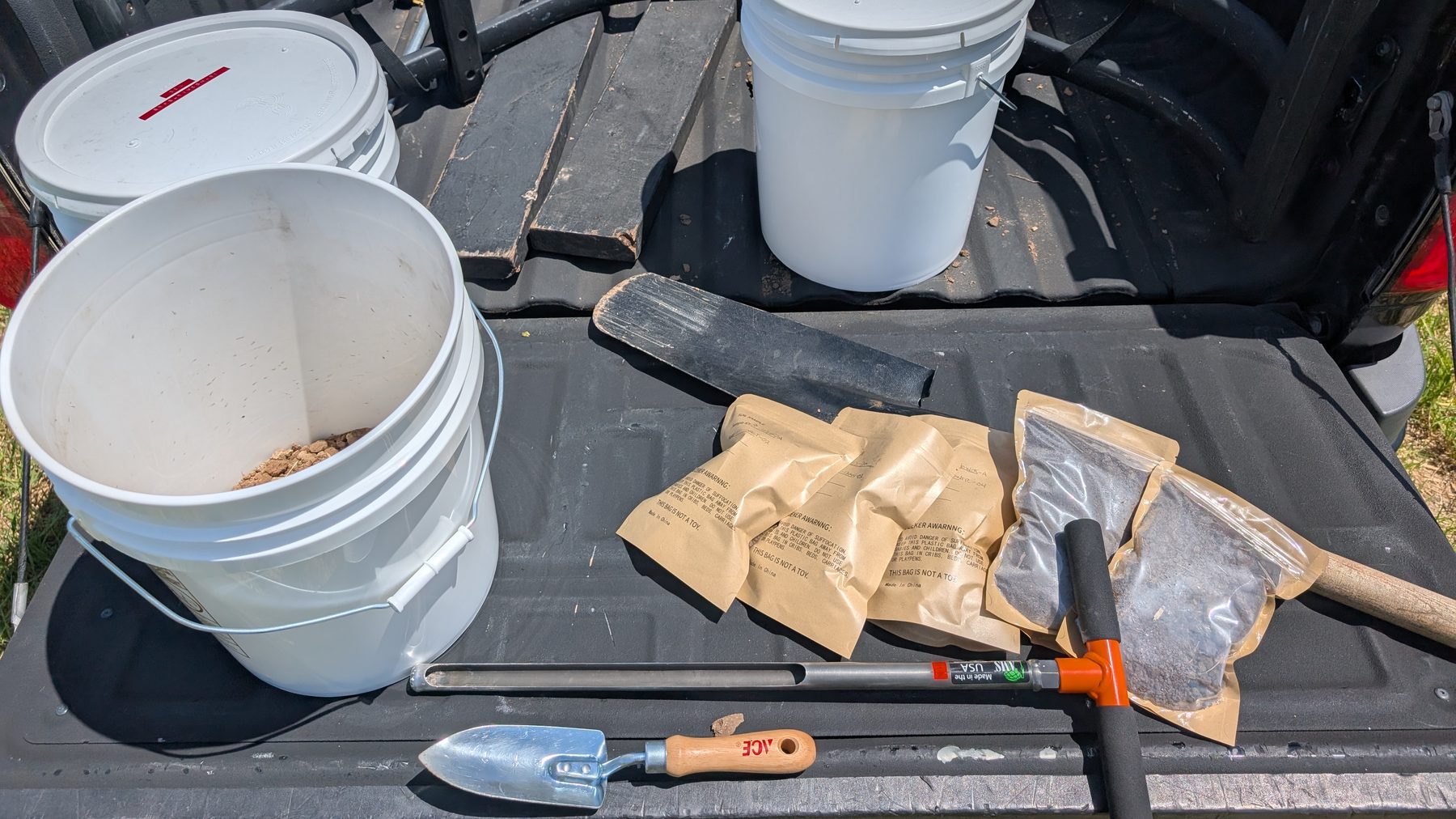 Fig · The day’s sampling kit — buckets, bags and hand tools · July 2026
Every part of this restoration eventually comes back to the soil, so before the native seed is drilled and before the first trays are struck on the propagation bench, we spent a day with buckets, bags and a sharpshooter finding out what the ground actually is. Not what the county soil survey says it should be — what it is, section by section, in the year we start.
Three reasons to dig
- The record — soil tests are part of our NRCS EQIP obligations. The conservation practices we’re signed up for start from a documented baseline, and the lab results go into the same public file as everything else here.
- The seeding — the native grass-and-forb mix is going into ground that has carried fertilized hay for twenty years. Knowing the texture, pH and nutrient load across the sections tells us what the seed is walking into, and where the drill plan needs adjusting.
- The bench — we gathered soil as well as sampled it. Screened native soil from the tract goes into the propagation unit’s mix, so the seedlings and cuttings we raise are started in the same dirt they’ll be planted back into.
How the day went
Cores were pulled across the working sections and composited by area, bagged and labeled against the section atlas — the samples for the lab in one set of bags, the gathered soil for the bench in buckets. It is unglamorous work in July heat, and it is the cheapest insurance the whole project buys: a seed mix or an amendment chosen against real numbers instead of assumptions.
What happens next
The sample set goes to the Texas A&M AgriLife Extension Soil, Water and Forage Testing Laboratory in College Station — the standard bench for Texas land work; the results go here. The numbers will shape the amendment plan for the converted acres, tune the drill mix where a section runs thin or alkaline, and set the recipe for the bench’s first potting mix trials. When the reports come back, they’ll be posted in this journal with the rest of the record.