Species Plate · Specialty Trees
Bigtooth Maple
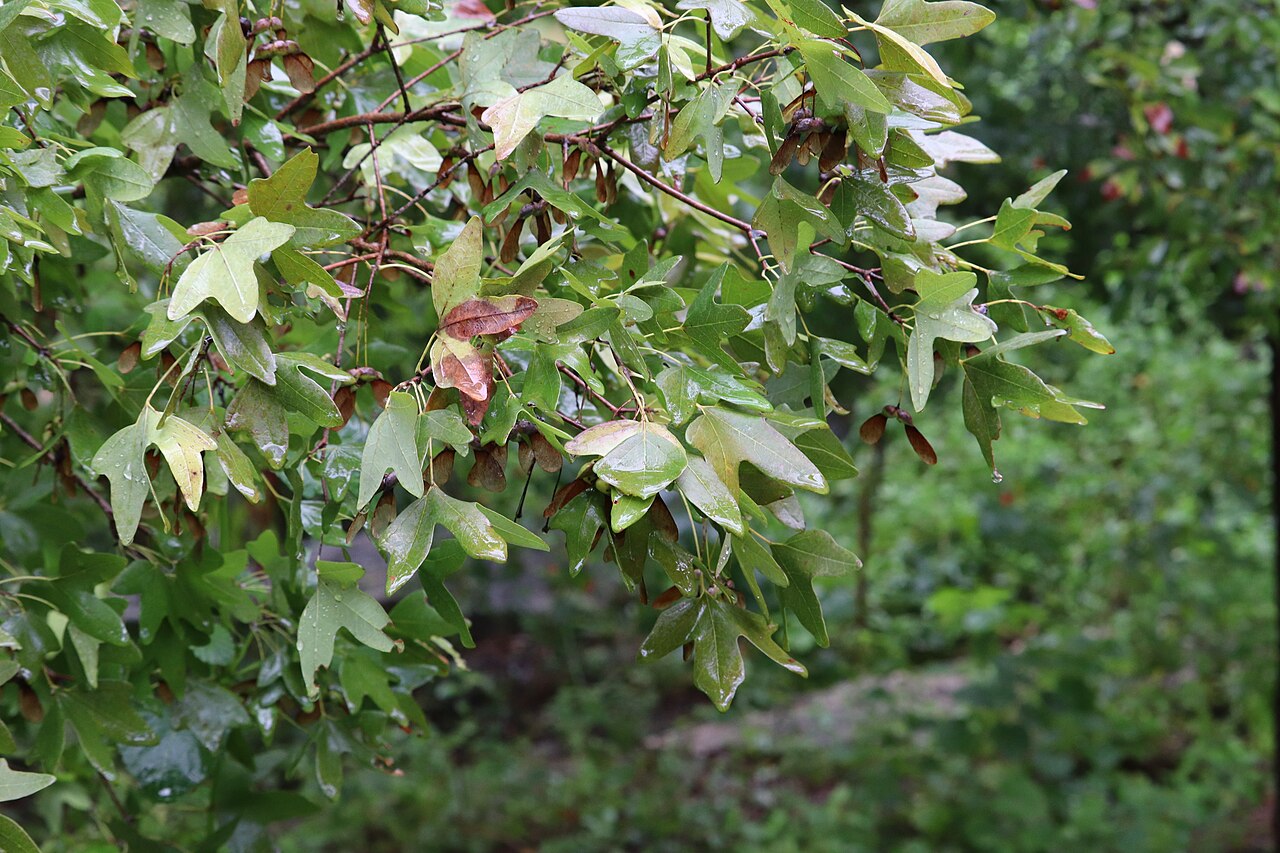

Restoration Role
Specialty tree. Bigtooth Maple is included for shaded draws, north-facing microsites, seasonal color, and ecological diversity.
Site Suitability
PrimaryShaded draws, north-facing slopes, protected canyon-like microsites
SecondaryRiver high terrace shade pockets
AvoidExposed upland prairie, hot south-facing slopes, wet clay
SoilsProtected SeC/RuB/SuB microsites with shade and drainage
HydrologyCool, protected, moderate moisture
Propagation & Care
Seed collectionCollect mature samaras in late summer to fall.
StratificationCold stratification 90–120 days.
PropagationSow shallowly after stratification.
Container progressionSeed → D40 → Field planting.
Nursery wateringConsistent moisture but not saturated.
LightPart shade / bright indirect. Avoid heat stress.
OutplantingBest age 12–24 months. Plant November–February into a protected microsite.
Establishment Watering
- Year 1: 10 gallons every 7–10 days during dry heat.
- Year 2: 10–15 gallons every 2–3 weeks if dry.
- Year 3: drought support in summer.
Field notesProvenance: out-of-range planting. The property holds a deep, shaded, spring-fed crevasse — the protected-canyon microsite this relict species requires — so the habitat match is strong here, but this is a horticultural argument, not a nativity claim. Browse pressure is High: deer browsing is a documented major cause of decline (UTSA bigtooth research; Lost Maples exclosures), so cage young trees rather than relying on generic protection. Do not treat as a prairie tree. This is a microclimate species.
Quick Reference
Difficulty4 / 5
Growth rateSlow to moderate
DroughtModerate in the right site
FloodPoor
WildlifeGood
Browse PressureHigh
MethodSeed
ContainerD40
SourcesPropagation data from the Short’s Resort Native Tree & Shrub Propagation Manual (SR-PROP-01). Photographs via Wikimedia Commons under the licenses noted on each image; credit to the individual photographers above.