Species Plate · Foundation Canopy
Chinkapin Oak
Restoration Role
Foundation canopy tree. Chinkapin Oak is the limestone-country white oak of the Edwards Plateau — thriving on the shallow, rocky, calcareous upland where many oaks struggle. Its sweet, low-tannin acorns are among the most sought-after mast on the property, favored by deer, turkey, and squirrels.
Site Suitability
PrimaryEastern Shelterbelt, Western Headwaters Savanna
SecondaryDrainage Savanna Edge, higher Filter Band pockets
AvoidWet drainage core, floodplain basin, saturated low soils
SoilsSeC, SuB, RuB
HydrologyDry, upland, well-drained limestone; no standing water
Propagation & Care
Seed collectionCollect acorns September–October as they ripen and drop. Chinkapin is a white oak — use fresh, heavy acorns with no weevil holes. Float test and keep the sinkers.
StratificationNone required. White-oak acorns have no dormancy and begin germinating in fall — do not cold-stratify. If holding briefly, keep cool in slightly damp coir and never let the acorns dry out.
PropagationSow fresh, 1 inch deep, directly into a D40 Deepot before the radicle emerges. Keep moist, not saturated. The taproot descends first; germination usually within 2–6 weeks.
Container progressionAcorn → D40 Deepot → Field planting. Optional: D60 Deepot if holding longer than one season.
Nursery wateringKeep evenly moist during germination. After sprouting, let the surface partially dry between waterings.
LightBright light after germination. 14–16 hours under grow lights. Harden into full sun.
OutplantingBest age 6–18 months. Plant November–February.
Establishment Watering
- Year 1: 5–10 gallons every 10–14 days during drought.
- Year 2: 10 gallons every 2–4 weeks if dry.
- Year 3: drought emergency only.
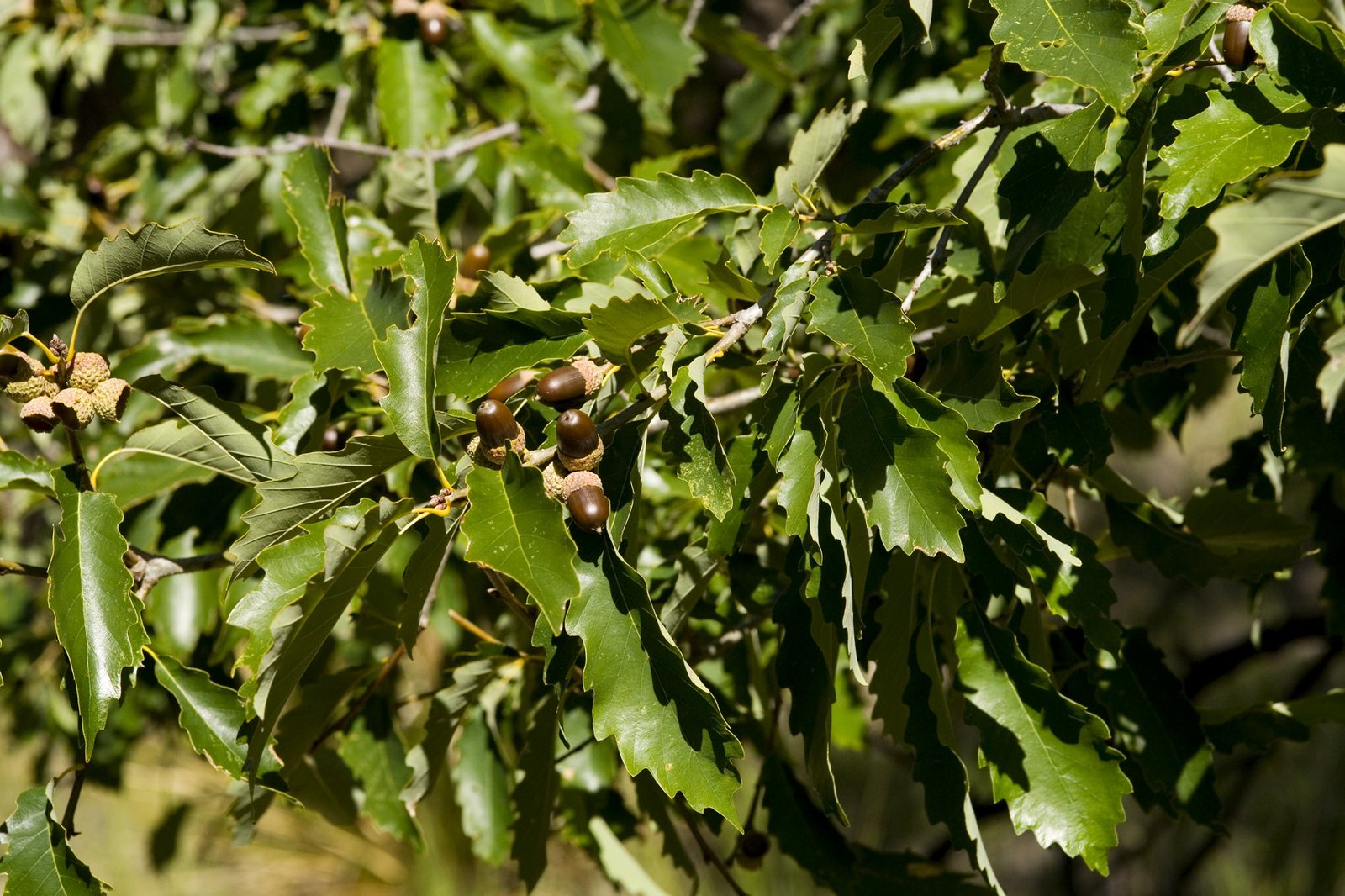
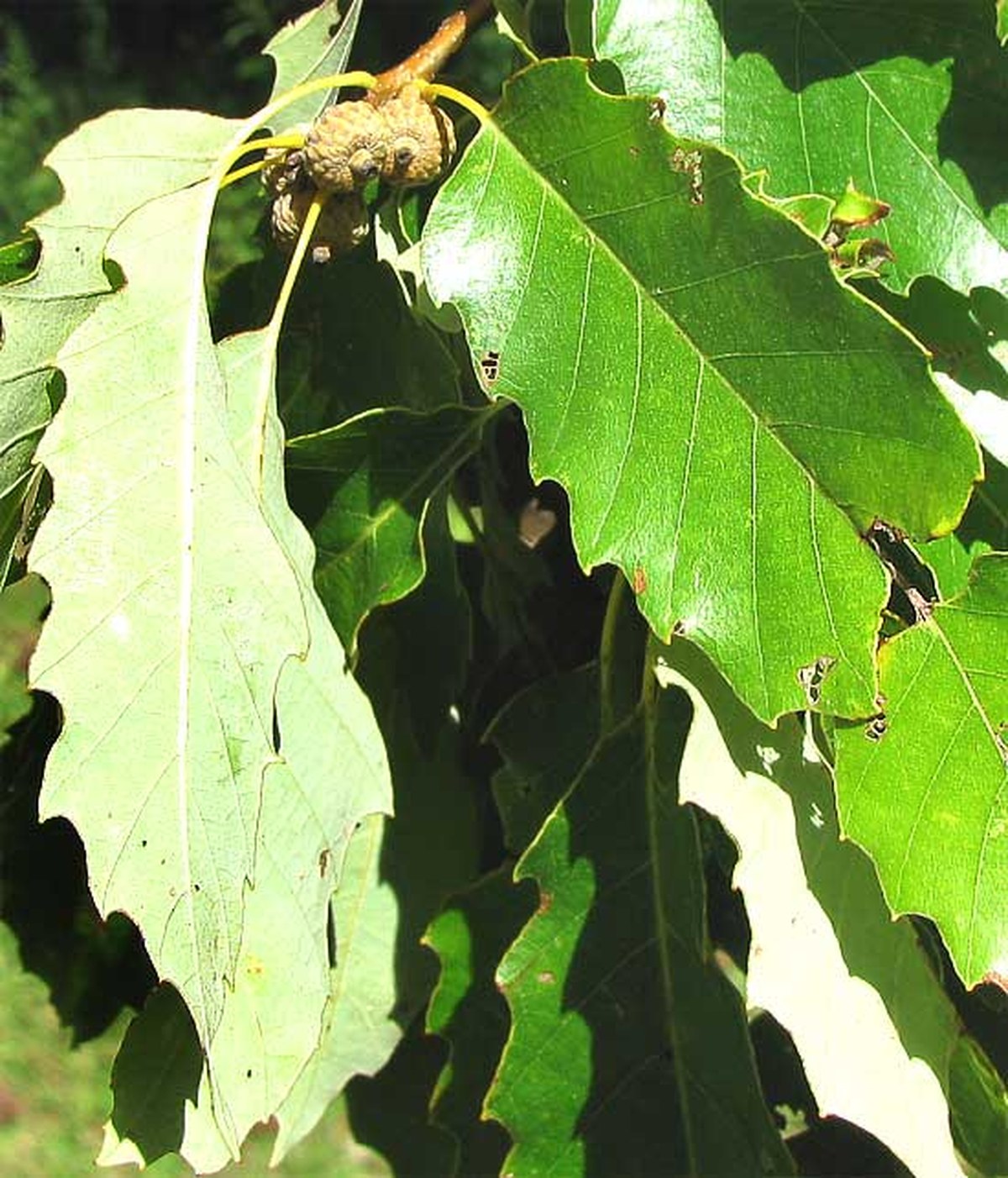
Field notesA true white oak (section Quercus): the acorns are recalcitrant — sow them fresh, never let them dry, and expect fall germination rather than spring. Distinctive chestnut-like leaves with coarse, gland-tipped teeth make it easy to identify. One of the highest-value wildlife oaks for limestone soils, and a natural companion to Post and Live Oak in the upland savanna.
Quick Reference
Difficulty2 / 5
Growth rateSlow to moderate
DroughtExcellent
FloodPoor
WildlifeExcellent
Browse PressureModerate; protect young seedlings
MethodSeed
ContainerD40 Deepot
SourcesPropagation data from the Short’s Resort Native Tree & Shrub Propagation Manual (SR-PROP-01). Photographs via Wikimedia Commons under the licenses noted on each image; credit to the individual photographers above.