Species Plate · Riparian Trees
Eastern Cottonwood
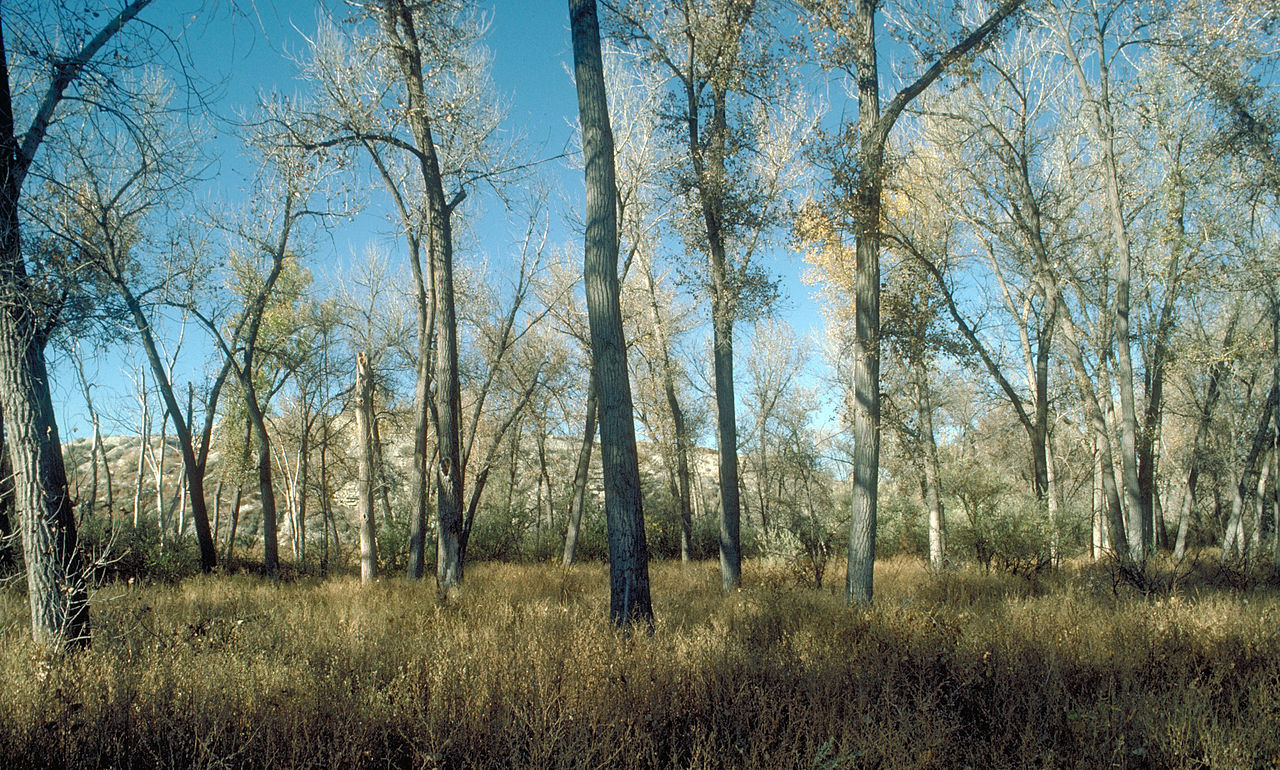

Restoration Role
Fast riparian pioneer. Eastern Cottonwood puts up rapid shade and structure along the river and wet drainages, stabilizing banks and creating early habitat while slower riparian species mature. A short-lived, fast-return legacy tree for wet ground only.
Site Suitability
PrimaryRiver Conservation Strip
SecondaryWet drainage core, Floodplain Agricultural Basin edges
AvoidUplands, dry savanna, near structures or septic
SoilsOa, BeB (river-influenced)
HydrologyWet to seasonally saturated; needs reliable moisture
Propagation & Care
Seed collectionCottony seed ripens late spring and is viable only briefly. Cuttings are the practical route.
StratificationNone. Dormant hardwood cuttings root readily without treatment.
PropagationFrom root suckers: cottonwood throws root suckers freely — lift and transplant a rooted sucker in winter. From cuttings: stick dormant hardwood cuttings or whips into moist ground in late winter; roots readily.
Container progressionCutting / sucker → D40, or stick whips directly along the channel → Field planting.
Nursery wateringHigh. Do not let cuttings dry out.
LightFull sun.
OutplantingBest age 6–12 months, or direct-stick cuttings. Plant December–February.
Establishment Watering
- Year 1: keep soil consistently moist; the tree wants water.
- Year 2: reduce only if sited on genuinely wet ground.
Field notesWet ground only. Keep well away from buildings, drives, and septic — the roots are aggressive. Plant for fast early structure, not permanence.
Quick Reference
Difficulty1 / 5
Growth rateVery fast
DroughtPoor
FloodExcellent
WildlifeGood
Browse PressureLow
MethodCuttings or suckers
ContainerD40, or stick whips directly
SourcesPropagation data from the Short’s Resort Native Tree & Shrub Propagation Manual (SR-PROP-01). Photographs via Wikimedia Commons under the licenses noted on each image; credit to the individual photographers above.