Species Plate · Structural Shrubs
Yaupon Holly
Restoration Role
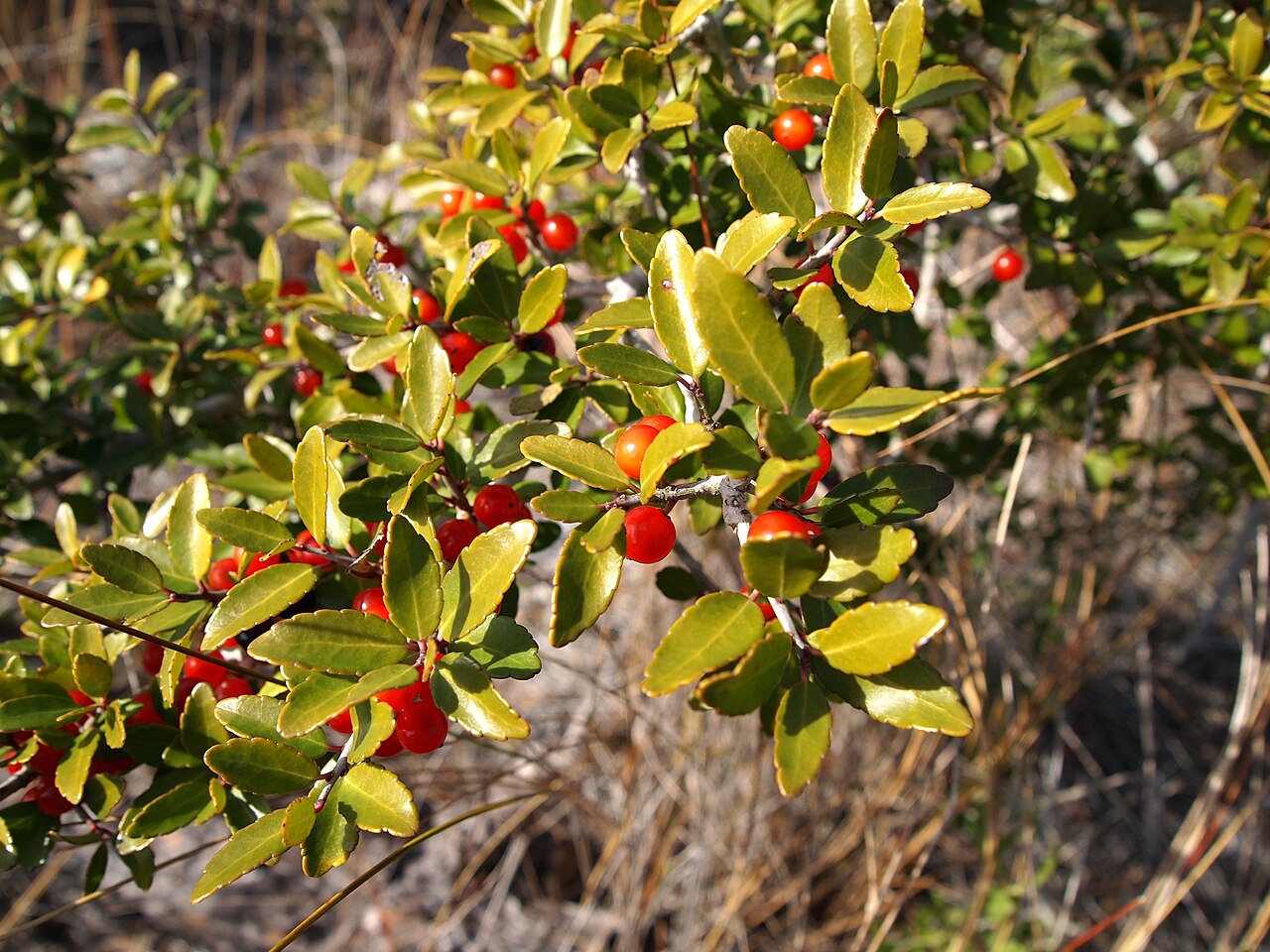
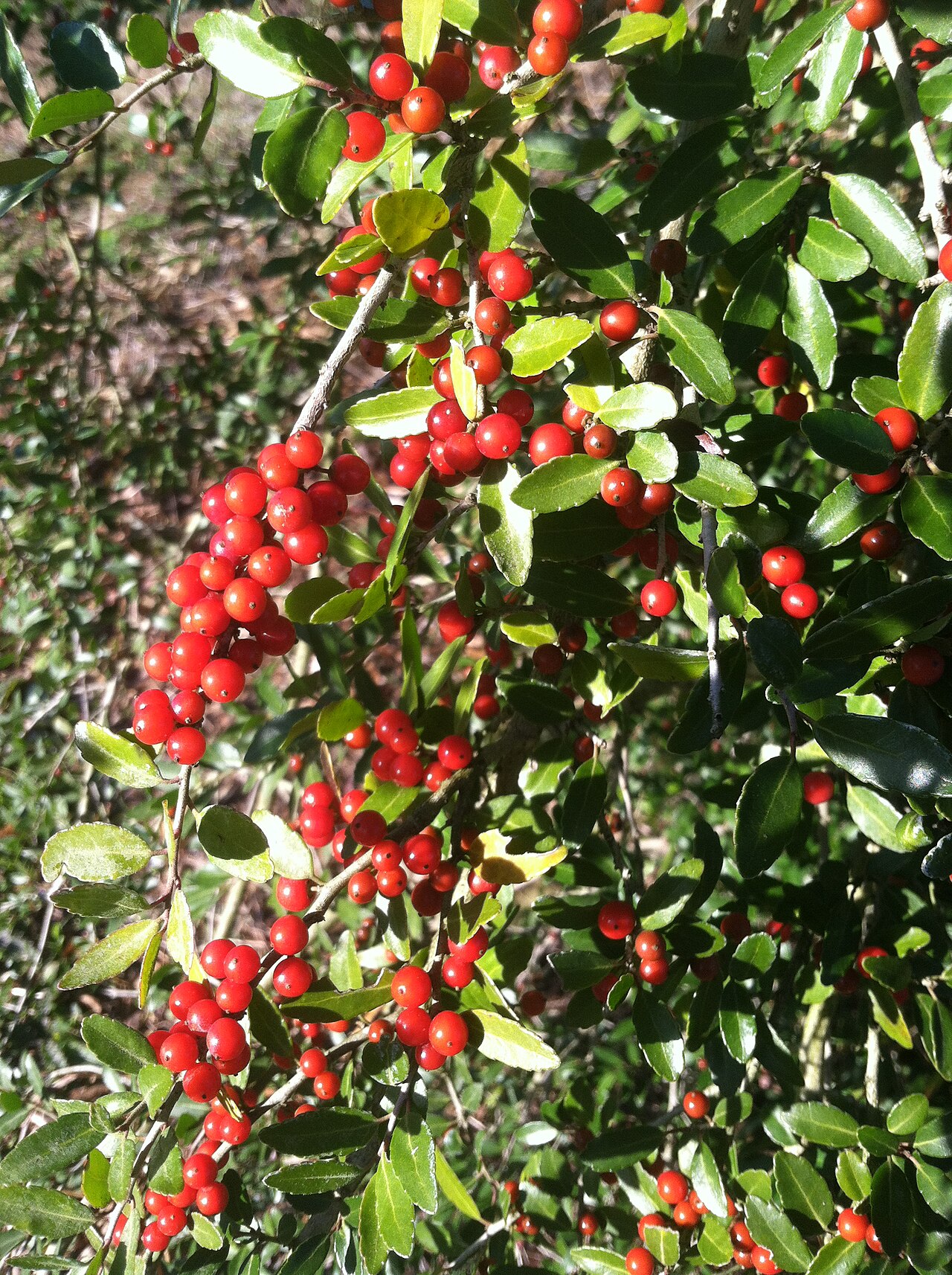
Evergreen structural shrub. Yaupon provides year-round cover, bright red berries that hold into winter for birds, and a dense, shade-tolerant understory layer. It is one of the most reliable evergreen natives we can establish, and the only caffeinated plant native to North America.
Site Suitability
PrimaryShelterbelt and woodland edges
SecondaryRiver Conservation Strip, Drainage Savanna Corridor
AvoidExposed open prairie with no canopy
SoilsSeC, BeB, Oa
HydrologyAdaptable; tolerates both dry and periodically wet ground
Propagation & Care
Seed collectionBerries ripen in fall. Seed is notoriously slow — often 1–3 years to germinate.
StratificationLong warm-then-cold stratification required for seed. Cuttings are far more practical.
PropagationPreferred: semi-hardwood cuttings in summer under mist; roots readily. Yaupon is dioecious — only female plants fruit, and they need a male nearby. Propagate from cuttings of known plants so the sex is certain, and keep a male in every thicket. Yaupon colonizes by root suckers — lift a rooted sucker in winter, an easy clone that keeps the parent’s sex.
Container progressionCutting → 5-inch pot → 1-gal fabric if held → Field planting singly or in cover clusters.
Nursery wateringModerate while rooting; tolerant once established. — Fabric stage (if the plant moves up from the 5-inch pot): fabric dries much faster than plastic and needs substantially more frequent watering outdoors in a Central Texas summer; the exact frequency is not yet set at the bench (open).
LightSun to partial shade; densest in sun.
OutplantingBest age 8–14 months. Plant November–February. Stock held in a 1-gal fabric pot may be outplanted later — air-pruned roots don’t circle, so the window extends; the actual figure will come from the first cohort.
Establishment Watering
- Year 1: 5 gallons every 2–3 weeks during drought.
- Year 2: drought only.
Field notesPropagate from known female (berrying) plants by cutting — seed is too slow and unpredictable to rely on.
Quick Reference
Difficulty3 / 5
Growth rateModerate
DroughtExcellent
FloodGood
WildlifeExcellent
Browse PressureGood; low browse
MethodSuckers or cuttings
Container5-inch pot
SourcesPropagation data from the Short’s Resort Native Tree & Shrub Propagation Manual (SR-PROP-01). Photographs via Wikimedia Commons under the licenses noted on each image; credit to the individual photographers above.