Species Plate · Structural Shrubs
Flameleaf Sumac
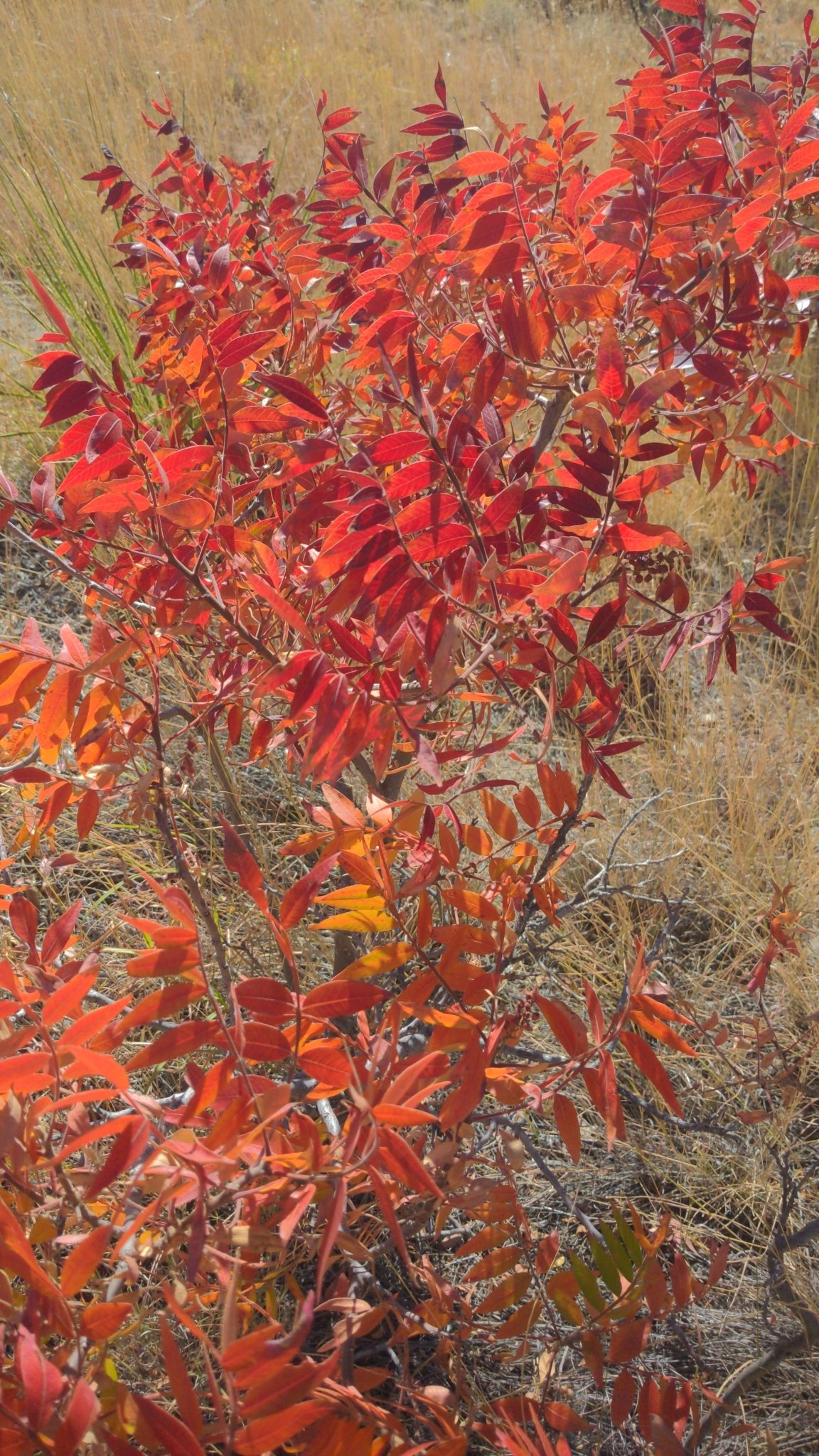
Restoration Role
Thicket-forming structural shrub to small tree. Prairie flameleaf sumac colonises by root suckers into dense motts that hold soil, screen wind and shelter nesting birds. Cream flower panicles feed pollinators in summer, the red drupes hold into winter for birds, and the foliage turns hard scarlet in fall — the most reliable autumn colour available to us on caliche.
Site Suitability
PrimaryUpland Savanna, Shelterbelt, Filter Band
SecondaryDry drainage edges, woodland margins
AvoidWet drainage core, floodplain, anywhere that holds water
SoilsSeC, RuB, SuB — thrives on shallow calcareous ground
HydrologyDry, well-drained
Propagation & Care
Seed collectionCollect ripe red drupes September–November, once the fruit has hardened and dulled.
StratificationDense, waxy seedcoat: scarify (acid or careful mechanical abrasion), then cold-moist stratify 60–90 days. Germination is uneven — hold trays a full season before discarding them.
PropagationFrom suckers: the reliable route. Lift a rooted sucker at the edge of an established mott in winter, cutting the parent root on both sides. From seed: workable but slow and irregular — sow scarified seed shallow in fall.
Container progressionSucker / seed → 5-inch pot → 1-gal fabric if needed → Field planting.
Nursery wateringLow. Overwatering is the main way to lose it. — Fabric stage (if the plant moves up from the 5-inch pot): fabric dries much faster than plastic and needs substantially more frequent watering outdoors in a Central Texas summer; the exact frequency is not yet set at the bench (open).
LightFull sun. Fall colour is weak in shade.
OutplantingBest age 6–18 months. Plant November–February. Stock held in a 1-gal fabric pot may be outplanted later — air-pruned roots don’t circle, so the window extends; the actual figure will come from the first cohort.
Establishment Watering
- Year 1: 5 gallons every 2–3 weeks during drought.
- Year 2: drought only.
Field notesPlant it where a spreading colony is wanted, not where a single specimen is — it suckers, and that is the point. Sited at shelterbelt edges and filter-band margins it does erosion work and fall colour at the same time. Provenance: regional Hill Country stock.
Quick Reference
Difficulty2 / 5
Growth rateFast
DroughtExcellent
FloodPoor
WildlifeExcellent
Browse PressureModerate; browses young growth
MethodRoot suckers, seed
Container5-inch pot → 1-gal fabric if needed
SourcesPropagation data from the Short’s Resort Native Tree & Shrub Propagation Manual (SR-PROP-01). Photographs via Wikimedia Commons under the licenses noted on each image; credit to the individual photographers above.