Species Plate · Riparian Trees
Pecan

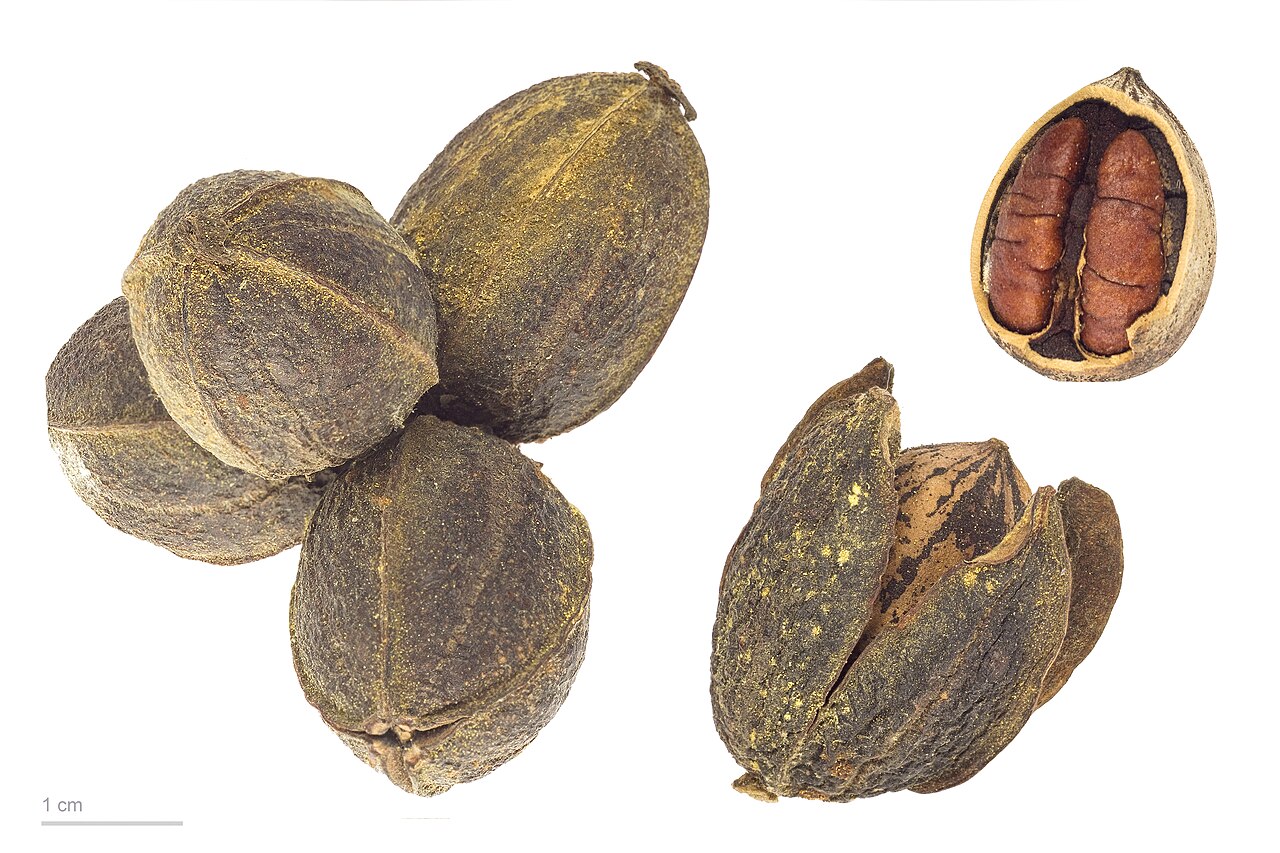
Restoration Role
Riparian mast tree. Pecan belongs in deep soils, drainages, and river-influenced zones. It is a legacy tree, not an upland restoration tree.
Site Suitability
PrimaryRiver Conservation Strip, Drainage Edge, deep alluvial pockets
SecondaryWestern Headwaters Draws only
AvoidThin rocky uplands, dry shelterbelt, shallow limestone
SoilsBeB, Oa, deep SuB pockets
HydrologyDeep soil, seasonal moisture, no severe drought exposure
Propagation & Care
Seed collectionCollect fresh nuts October–December.
StratificationRequired or strongly recommended: 90–120 days cold stratification in slightly damp coir.
PropagationPlant whole nut 1–2 inches deep after stratification.
Container progressionNut → D60 Deepot / treepot → Field planting.
Nursery wateringEven moisture. Do not dry completely.
LightStrong light after germination. Harden to full sun.
OutplantingBest age 6–18 months. Plant November–February.
Establishment Watering
- Year 1: 10–15 gallons every 7–10 days during dry periods.
- Year 2: 15 gallons every 2–3 weeks in drought.
- Year 3: monthly drought support if needed.
Field notesDo not plant pecan as an upland prairie tree. Plant it where water and deep soil already want a pecan.
Quick Reference
Difficulty1 / 5
Growth rateModerate to fast in good soil
DroughtModerate once established
FloodGood
WildlifeExcellent
Browse PressureModerate
MethodSeed
ContainerD60 Deepot or deepest available
SourcesPropagation data from the Short’s Resort Native Tree & Shrub Propagation Manual (SR-PROP-01). Photographs via Wikimedia Commons under the licenses noted on each image; credit to the individual photographers above.